Tuesday, October 23, 2012

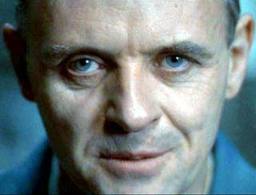
Serve With Fava Beans and a Nice Chianti: The Hannibal Lecterism of Happy Meat


I was originally drawn to her because of the rare quality of her breeding. The moment I saw the young female, I knew that I was the perfect person to be entrusted to see her through to the end.

I had had a young female the year before, a close relative of hers, and her fine heritage took me aback. She spoiled me for life: I couldn’t go back to having those of an inferior caliber again. When it was time that I wanted to have another one, I knew I wanted one of her pedigree once more, but I didn’t want to just be a passive bystander in her death again. Something within me needed a different experience. This time, I had to actively participate in her death, until her last shudder, and follow that through to her complete disassembly. The entirety of the young female would be used very purposefully and with great intention.

She had been born into a life of high standards. Being a rare creature myself, I recognized this in her. There are too many females of interior genetics, ones who are common and low born, and this one was cut from a different cloth. She was special and lovely and she had to be that way in order for me to consider having her as mine. Of course I wanted to see how she lived so I would have a deeper appreciation of how she was to die.

I wanted her parts, the internal organs, her viscera, the blood of her, still fresh and warm. I wanted her tender flesh, cut from her with my trusted instruments and pulled with my own hands. I wanted to understand the elegant, clever design of her before I consumed her, and I wanted to break her down personally. I wanted to find creative uses for every last inch of her so her life wouldn’t have been taken in vain.

Seeing her in out her natural habitat, breathing in the crisp autumn air, I knew that I made the right decision. She wasn't like the others, the poor, pathetic creatures that have been so damaged by poor genetics and circumstances. This one was different. She was a perfect specimen of her variety, a natural female, her pretty cheeks warmed by the sun to a golden peach. This was a young female who had felt gentle breezes blowing through her auburn hair, who had never been mistreated by course, rough hands, who had dined on organic blueberries she’d plucked from a neighbor’s garden with her own graceful hands. I insisted that she live no less of a life before I would take it from her.

That day, I spent an hour getting to know her and she seemed to trust me from the start. I rubbed her shoulders, and I touched her hair, warm from the sun. She was playful, affectionate, spirited. She smiled easily, clearly enjoying this life, and she had no idea of my intentions. This began to make me very uneasy but I told myself that it was better this way, better that her life would end with someone she trusted rather than at a stranger’s hands in an unfamiliar, cold setting. This was much more humane. Breathing deeply to keep my emotions in check, I held her hands in mine. I looked my young female in the eye. I told her that I was grateful for what she was about to give me. I may have even shed a tear. I have consumed countless young females in my lifetime, but being there then was a deeper, richer experience, though one fraught with tension. I wouldn’t have traded it for anything in the world.

In the end, her death was astonishingly quick and easy – two quick bullets - which is fortunate because there was no time to waste.

First I carefully undressed her and then I began collecting my blood. I’d never had this before so it was a priority. I had to make that everything was positioned right to bleed my body properly, otherwise all that good blood would be squandered. It was a struggle propping everything correctly and I questioned whether I was cut out for this work but in the end, I was successful and I am very glad that I had the persistence to see this dream of mine – fresh blood – realized and that I didn’t quit.

That task completed, there was a lot of work ahead of me, which meant scalding, scraping, cutting through fat, muscles, tendons, and tugging out organs. As repulsive as it might sound to an outsider, it was a breathtakingly clean and methodical process, breaking down the body bit by bit and seeing how the organs looked and felt close up: the heart, the kidneys, the bladder, one by one, I observed them with the cool-headed precision of a surgeon and gently placed them in my container. The bright pink lungs in particular, lungs that just a short time ago had breathed in the same cool fall air as I, were especially noteworthy. She did not disappoint.

Separating the intestines from the fat and other tissues meant that with just a good cleaning, I now had sausage casing that I had pulled from a body I chose with my own hands and technical skills. It was hard to not feel prideful pulling out handful after handful of healthy intestine. This makes it all worthwhile, I thought to myself as my organ container continued to fill, steam slowly rising from it. The young female was no longer of this world but all these different parts and pieces would extend her far life beyond her reach as a living being. The incredible responsibility I felt of needing to continue to provide stewardship for the young female even after her death was a profound realization.

After she was fully broken down and stored properly, I felt I owed it to myself and to her to finally enjoy the fruits of my labor. Carving bits of her flesh on my butcher block, I was able to quietly to reflect on our symbiotic relationship: she gave her life to provide nourishment for me and I was able to consume her with true appreciation for her fine quality. We gave this to each other.

In a beloved cast iron skillet that once belonged to my grandmother, I sautéed delicately sliced pieces of her flesh with minced garlic, baby carrots, parsnips and fresh purple basil and thyme from my garden. The scent of her filled the air: rich, savory, mouthwateringly alluring. A splash of her blood to thicken the sauté was an inspired improvisation, I think.

Sitting down to finally enjoy the meal I’d created, I knew that I had made the right choice. She was tender but perfectly substantial, sinewy in certain places but nicely balanced by her delicate texture. Her flavor so effectively captured her essence that at times, it was as if she was still with me, sitting across the table from me, her hair glinting in the candlelight. I toasted her spirit.

In all, it was a beautiful, bittersweet experience. I couldn’t help ruminating on how she slumped back with that first bullet, the look of shock and horror marring her perfect features along with the spray of blood. I thought of how much work it was to collect all the blood, how exhausted I felt, pulling out the intestines but how I had to do right by this young female. She would live on to be my steaks, sausages, burgers and bacon for the year as well as provide bits for stew, gravy, casings and so on. I think she would be proud to know how very well used she would be.

After this experience, I will never again take another’s life and death for granted. When it comes time for me to harvest another young female, I will bring this same intentionality and poignancy. It will be my gift back to those who give me their lives and it is my gift to myself. I will do right by all the future young females who will grace my butcher block. You can count on that.  
_________________________________________

If you think that this is extreme, please read this first hand account of the slaughter of a pig by popular Chicago butcher, Rob Levitt. With me just making one simple, easy switch of who the victim is, suddenly it’s evident that the story was written by a psychopath, despite the key details remaining essentially unchanged.

The self-aggrandizement, as well as the perfectly clinical and Hannibal Lecter-esque narrative, were deeply disturbing to me in Rob Levitt’s essay. It is one thing to mindlessly eat animals. It is another thing to romanticize the special flesh you consume, to repeat the narcissistic myths you want to think that eating it says about you. Make no mistake, it is the mindless consumption that is creating the immense death toll of ten billion land animals in the U.S. each year, but it is this arrogant, self-serving mentality of entitlement that is so pervasive among Happy Meat enthusiasts that I find deeply chilling. It is also what has me thinking as a satirist.

If my essay was disturbing to you, that is a good thing. It means you can still feel. Thanks to Nicole from Upton's Naturals, a dedicated vegan protein company, for bringing it to my attention. 


Wednesday, October 10, 2012

Creating the Wave


“There is nothing like a dream to create the future. Utopia today, flesh and blood tomorrow.” Victor Hugo

Sometimes it can be nearly impossible to see the big picture because, as advocates for animals, what we are looking at is pretty bleak. Speaking personally, it is never far from my mind how much needless suffering, barbarism and destruction is happening and, with each moment, how much more is to come. Each second, babies are stolen from mothers, innocent beings suffer in confinement, bolts are shot into brains, knives are slashed across necks. The despair from knowing just how easily it could all be prevented if people simply acknowledged the injustice of the violence and decided to give a damn is difficult to mitigate. Those of us who are awake to what is happening feel the senseless pain of it so deeply, and because of this, we are not always aware of its counterpart: the slow-but-steady grassroots shift that is occurring in tandem. Just as stop-motion photography reveals dramatic transformations due to subtle metamorphoses that are imperceptible to the human eye, the vegan movement has been making strides in recent years but we often need a something different – an altered perspective, a fresh lens - in order to notice it.  

I have been vegan since 1995, a time when I would gasp and spontaneously erupt into a happy dance if a café had soymilk. With my nature being much more inclined to enthusiastic outbursts rather than, say, doing the professional poker circuit, I’m sure I startled many a coffee shop patron deeply engrossed in that new Sartre biography but I didn’t care. Even though I have always very much disliked the taste of coffee (the word swill comes to mind), I would hold my nose and suffer through a sip or two just so I could enjoy the novelty of coffee with milk in a café like a normal person. (This is pretty much where my desire to be normal begins and ends.) In 1995, even in a large, multicultural city like Chicago, vegans didn’t have much but it was just beginning to trickle in. The landscape has transformed before my eyes since then.  I wish I had stop-motion photography to illustrate this. In retrospect, we were on the cusp of a sea change that is really still in its infancy. The wave of change has just begun gathering strength, but, have no doubt, it is happening and nothing can stop it.

If 1995 had a vegan pastry mascot, it would be dense, beige, heavy and could best be described as “roughly muffin-esque” but my activist friends and I would still be turning cartwheels in the streets for it. Contrast that with my son’s experience 17 years later. Over the summer, we went to a cute West Coast-based cupcakerie that opened an outpost here. I was struck when my son initially turned up his nose at the pretty red velvets, sniffing, “They only have one vegan flavor?” Despite being one of the most distinctly unreserved children I know  - the spontaneous happy dance gene is inheritable, apparently - you still have to get up pretty early in the morning to impress my born-and-bred herbivore with your vegan culinary creations. This is how much the environment around us has changed. When my son seems a bit too comfortable with the easy-peasy vegan world he was born into sometimes, I make him listen to my equivalent of the old “I used to walk ten miles barefoot in the snow to school” saw, telling him that there was a time not too long ago when vegans couldn’t just walk into any ol’ bakery and expect to find a pastry they could eat.  (“Imagine the hardships your stoic forebears faced.”) And we may not have been barefoot in the snow but our poorly constructed, plastic-y shoes came from catalogues that were archaic even at the time. Except for those who could afford expensive imported shoes from England, we may as well have been barefoot in our porous boots in Chicago in January but we didn’t complain because at least we had vegan shoes finally, for god’s sake, and they weren’t Converse, either.

Of course, the changes are not just better access to higher quality cupcakes and shoes. I am not one who puts much stock in “humane” meat or animal products, but the fact that this is a subject so many people are bringing up in defense of their meat-eating shows something encouraging. While the industry may provide another layer of fantasy and self-denial for omnivores to delude themselves with, the fact that people want to think that they are seeking out “more humane” animal products means that the personal discomfort with the status quo of eating animals is now something people are acknowledging out loud. This is a profound shift. No one was talking about this 17 years ago, certainly not in the widespread way that it is talked about today. Although I think that the happy meat sphere is a serious obstacle to compassionate living that wasn’t there before, the urge to reconcile this internal discomfort actually is cause for hope.

People are still eating ten billion land animals every year in the US alone, though, as if it is our birthright, as if the burgers and nuggets people eat were in fact grown in the patches shown in the old McDonald’s commercials. We may be eating less meat in the United States but international trends show an increased consumption throughout Latin America, Asia and Africa as animal products become less expensive, more accessible and a new generation of children develops an expectation of meat at nearly every meal. We are decimating our oceans, practically dredging them of life. Our addiction to cheap protein is altering this very planet. We have put our habits in the driver’s seat, and they are actively steering us toward a frightening future. Fabulous cupcakes and stylish shoes will not dull the sting of that reality.

The world is changing but not quickly enough. We need to go out and be great examples of being vegan and we’ve got to proudly own it. We are not doing the animals any good, nor are we slowing the ecological destruction of animal agriculture, by silently minding our own business. If speaking out about needless killing and destruction isn’t our collective business, I don’t know what is. We need to become empowered to use our voices, talents and passion for creating the world we want to live in because, quite simply, we are the ones to do it and the world needs us to step forward.

This doesn’t mean shouting. This doesn’t mean shaming. This means being honest, being humble, being inclusive, giving people the tools to make it easier for them and empowering them to make positive changes. On our own front, we should celebrate the small victories (so many great cupcakes!) but expect to keep shouldering on: creating a massive cultural shift of the one we are pioneering is not going to happen through anything but conviction and sheer endurance. This is how waves happen. Keep pushing forward with certainty that the world needs what you are creating and full of gratitude that you have this amazing opportunity to be building something so fundamentally good, kind, just and necessary.

If no one has said this lately, from the bottom of my heart, thank you. Thank you. You are amazing.

Now let’s get back to work. We’re building that wave, bit by bit. 

Wednesday, September 12, 2012

Top Ten Frequently Repeated, Often Illogical and Always Convenient Myths Repeated to Vegans


Revisiting my previous post, I wanted to share some of the common myths and conceits that are repeated to vegans as if they were truth. I am doing this sort of as a favor to those who repeat them because, honestly, guys, you probably don’t realize the regularity with which we hear them. And when we hear them, it’s all we can do sometimes to be patient and not roll our eyes. You don’t want to be someone who causes excessive internal eye-rolling, right? There are many, many more myths than the ones listed here and many subsets of the ones I have, but you get the idea. We’ve heard it all before.

1. Vegan food is expensive.

First I have to ask: compared to what? Compared to fast food? Well, yes, compared to dollar menus of hamburgers and fries, it is more costly on the surface, but the expenses of illness and obesity more than offsets this. Time spent off of work waiting in doctor’s offices, scanning drugstore shelves for anti-constipation remedies, or getting arterial stents inserted is expensive.

The next question is if vegan food is truly expensive compared to meat and animal products. Quite simply, it’s not.

The average price for a pound of ground beef in July of this year was $3.085. The price for a pound of dried organic black beans was $1.99 at Whole Foods. One cooks down and the other expands with cooking. The poorest people of the world are often nearly vegan by default. Let’s look at what they eat: Legumes. Grains. Seasonal fruits and vegetables. Fresh herbs. Nuts and seeds. They are not eating organic, heirloom goji berries at $15.99 an ounce. They are eating simple peasant food that is grown close to home because that is the least expensive and most accessible. In our own country during the Depression, we canned and froze the harvest to make food less costly. The notion that vegan food is more expensive than animal foods is simply not fact-based. It does cost more on the surface to be discerning about what we put in our bodies but it is far more expensive down the road to be unwell. Consider eating whole, unprocessed foods another form of health insurance.  

Please note that none of this is even considering the expenses our whole society takes on in cleaning up the ecological mess of animal agriculture. 

2. Caring for animals prevents us from caring about people.

This is a false dichotomy born of an absolutist perspective. If one looks at the world through an either/or lens, it’s a natural conclusion that advocating for some means that we cannot advocate for others. In truth, compassionate people are compassionate people. Does someone who kicks his dog have more of a reservoir of compassion for people than someone who doesn’t kick his dog? We don’t turn compassion on or off like a faucet and we are not born with a finite supply of it. The greater empathy you feel for others, the more empathy you will produce. It is more like a muscle than a supply. I would be far more trusting of someone’s willingness to care for others who has demonstrated an ability to empathize and take courageous action on another’s behalf. The people who feel we need to carefully parse our compassion? Nah. Not so much.

3. Vegans are in a cult/engage in “group-think.”

Hee. This one is especially amusing to me.

Anyone who knows anything about vegans knows that you ask five of us the same question, you are likely to get five different opinions (or maybe 18 different opinions), some that may profoundly differ from one another. We will go to the mat on topics as seemingly benign as to whether we will date non-vegans and go for the jugular on the topic of what we feed our cats. The array of topics on which we will loudly disagree is truly spectacular, almost a renewable resource: whether to wear our old leather and wool items or give them away; whether or not we will eat at restaurants that serve meat; whether vegans are allowed to be motivated by health concerns over their ethical convictions; whether we support incremental animal welfare measures or most assuredly do not. This is just the tip of the iceberg. There is no shortage of topics for us to vehemently disagree with one another on and there never will be. We have no central leader, no agreed upon strategy and, honestly, no overarching goal. One thing vegans would agree upon is that we do not believe that it’s our right to abuse and kill animals. From there on out, though, all bets are off.

4. We have to be 100% impeccably vegan about everything our bodies come in contact with or else we are hypocrites.

You know what? We lived in a flawed world. We live in a violent world built upon exploitative systems. Have you noticed? There is animal-derived stearic acid in car tires: even if you don’t drive, it’s in bike tires. Gelatin is used to make the non-digital films people see. Those beautiful vegan cookbooks? Most likely, they are held together with casein in glue. We get it.

We didn’t create this mess and actually, we’re the ones trying to get us out of it. The reason why there are animal-derived components in so much is because of the conceit that animals are ours to use as we wish and because, well, after eating whatever we can off of their bodies, there is a lot left over for people to make money off of still. We’re trying to create a world in which we do not exploit others. We are not there yet and the world is a complicated beast with many tentacles wrapped around various forms of exploitation. We’re not going to extricate ourselves overnight but at least the vegans are trying our best to minimize harm. Could you say the same? 

5. Historically, there has never been a vegan culture.

Ergo? And? We are blazing trails, not creating historical reenactments.

There was never a Christian culture before Christianity. There was never a culture of feminism before pioneers created it. There was never an ecological movement until people started it. We are not limited by the past: thankfully we have self-determination. While those who are yoked to the past keep coming up with nonsensical excuses, vegans are actively creating our own burgeoning culture that can make a difference now and benefit future generations. What is more exciting and promising, having our future hemmed in by history or boldly creating one ourselves?

6. If the world went vegan, what would we do with all those animals not used for food?

This is where people really start grasping at straws.

First of all, why do you suddenly care about the tenability or sustainability of caring for billions of animals at once? Were you concerned before about the giant, leaking fecal lagoons, dead zones in the ocean, air pollution and horrific wastefulness of animal agriculture? (And, oh, bonus points for gullibility if you think that the magic wand of organic agriculture would make the giant footprint of massive animal agriculture disappear. Ta da!)

Second, who on earth said that the world would go vegan overnight? Is that at all likely? What vegans are working for at best is a world that is shifting away from animal agriculture and even the most optimistic, power-of-positive-thinking, cheerful herbivore knows that this would occur gradually. Of course. The idea that we would wake up one morning after the Vegan Revolution to chickens all over our front yards, turkeys in our trees, and cows taking over the boulevards is absurd.

What would happen to all the liberated animals if they are not born, bred and killed for our interests? Well, something tells me that we have oodles of time to figure this out. One idea: as demand eventually decreases and fewer animals are bred in order to be made into food, the populations would decrease. As populations decrease, we need less of the massive amount of land that is currently earmarked for monocropping soy, corn, and wheat that is fed to all the animals in confinement. Perhaps this land could be freed up for some of the animals to live out their lives in peace. I’m not saying that I have the answers but I am saying that we don’t need them yet. Because it’s not going to be overnight, that much is certain.

7. What about all the SOY?! Vegans eat too much soy and that is destroying the environment.

Okay, is it honestly logical that vegans, checking in (very optimistically) at about 2.5% of the population, are creating all this demand for soy? All those damn Boca burgers? Seriously? You know who is responsible for the monocropping of soy? Omnivores. Omnivores eat the billions of “food animals” who consume all that soy in their feed. So if you are really, truly concerned about the environmental implications of soy, it’s simple. Do what I do: go vegan and limit your soy consumption. Easy peasy. And contrary to common opinion, vegans do not all eat tofu nuggets dipped in dairy-free mayo with a side of soy jerky. I buy tofu maybe twice a month. Could the omnivores say that they limit their soy consumption to this extent? (Oh, plus it’s totally not an ethical argument. Do not be misled by this one.)

8. The life and death of a cow and the life and death of a tomato are roughly equivalent.

Oy vey. Science was never my topic but I will give it a shot here.

One has veins and arteries. One doesn’t. One has a central nervous system. One doesn’t. One has a spinal cord with nerve endings. One doesn’t. One has a body designed by evolution and natural selection to avoid pain and suffering. One doesn’t. One has a thalamus. One doesn’t. One has a limbic system. One doesn’t.

Further, one is forcibly impregnated. One isn’t. One has babies who are taken from her shortly after birth. One doesn't. One calls out for them after they are taken. One doesn’t. One is de-horned, branded, and castrated without anesthesia. One isn’t. One has the proven capacity for emotionally bonding with her offspring and others. One hasn’t. One demonstrably suffers using an empirical checklist of physical and observational yardsticks. One doesn’t.

If you don’t believe in evolution and your beliefs tend toward Creationism, a Great Creator, Gaia or a combination thereof, perhaps you can tell me why your compassionate creator designed beings with a proven capacity to suffer and a clear desire to avoid said suffering only to give them no possibility of escaping that pain. What was the purpose of that? Where is the intelligent design or benevolence in that? I would never believe in a creator who would be so cruel as to imbue such deeply exploited beings with sentience and emotions only to have them needlessly suffer.  

One bleeds. One cries out. One writhes in pain. Making cows and tomatoes (or chickens and pears or any other animal-plant combination) peers in the capacity to feel and suffer shows how willing some omnivores are to suspend critical thinking in order to justify their habits.

9. Our bodies evolved to eat meat.

Evolution is an ongoing process. It is not static. There is plenty to contradict the notion that we are designed to eat meat (our teeth made for chewing rather than tearing, our small mouths and jaws, our lack of claws, our long, pouched long intestines) but I am not going to get into that. Evolution is, well, evolving, and thankfully we have some choice in the matter. The fact that we can live healthfully and abundantly without animal-based foods is all I need to know.

10. Native Americans showed their respect and gratitude for the meat they ate. I am doing the same.

I think that cherry-picking from various cultures in order to imbue one’s habits with pseudo-spiritual values is really exploitative and self-serving. Here are some other things native cultures have done: left their sick, disabled, wounded and unwanted to die; gone hungry when food wasn’t plentiful; pooped in holes in the ground. And on and on and on. How many other “Native American” habits do you maintain? Or do you just maintain the ones that make you feel that your comfortable habits are spiritual in nature rather than entitlements? 
 
If you want to feel respect and gratitude for me, don’t kill and eat me. If killing me is how you show respect and gratitude, well, then I’d rather not have it. I will just prefer sovereignty and compassion, thanks. If you have to invoke some quasi-spiritual convictions that you keep handy for justifying your habits, I’d say that this is evidence of hypocrisy and, ultimately, disrespect for the cultures you claim to respect.

What else have you got?

Friday, August 31, 2012

The Persistence of Fairy Tales…


“Peace is a process of retraining the mind to process life as it is, rather than as you think it should be.” Dr. Wayne Dyer

When I was a child, one of my favorite books was a lavishly illustrated collection of Hans Christian Anderson’s fairy tales; the story I liked most of all was The Emperor’s New Clothes and not just because of the image of the pompous central character strutting around in his underwear. The story is about a narcissistic emperor duped by two swindlers posing as weavers who decide to capitalize on his vanity and convince him that they could make him a suit of such exquisite materials that it actually has magical properties: it is such finery that it will be only be visible to those who are worthy of its fine quality. The weavers actually have no cloth but they make a great show for days out of the measuring, cutting, and weaving of this supposedly magnificent material and the emperor sends his officers to check on the progress of the suit they are making. The statesmen, afraid of seeming inferior by admitting that they don’t see anything, each report back to the emperor, gushing about the surpassing grandeur of the suit he has commissioned. Privately, though, they are each deeply troubled, believing that they are the only ones who can’t see or feel a thing as the weavers work on their invisible garment.

When it is time for the emperor to display his magical suit in a procession for the townspeople, the weavers again make a great show of putting the invisible-to-all suit on him, pulling it up his arms and legs, standing back to admire it, while everyone, including the emperor, praises its unparalleled quality, each afraid to admit to themselves and each other that they do not see a thing. When the emperor finally does the procession, the townspeople, all informed of the supposed properties of the suit and afraid of looking stupid or beneath their neighbors, make a great public display of being astonished by its beauty. The charade continues until a child, unaware that everyone else was participating in this unspoken deception, impulsively shouts out the obvious, that the emperor isn’t wearing any clothes. Soon, the townspeople abandon the ruse and the crowd yells that the emperor is wearing no clothes. Even as it dawns upon him that he had been deceived by the weavers, the vain emperor must continue, now humiliated and stripped of self-delusion, parading in front of the villagers in his undergarments while everyone knows that he has been made a fool.

This story appealed to me not only because of the moral about the silliness of vanity and ego but also the concept of clinging to a belief despite all the clear evidence that it is a false one. Like the emperor, when we want to believe a lie about ourselves, we cling to the self-deception even more resolutely, sometimes as if our lives depended on it being true.

For the past 17 years, I have heard otherwise intelligent people tell me fantastical tales with a straight face as a means to justify their omnivorous habits. I have heard time after time that plants feel pain, despite having no central nervous system or this notion having no evolutionary logic. Just a few days ago, someone ventured that mowing a lawn was akin to trimming a dog’s nails. I have heard people who in no other ways emulate indigenous people invoke their “respect for Native Americans” as a way to infuse their meat-eating with an air of quasi-spirituality. (Along those lines, I have heard enough people wax philosophic about the Circle of Life - and their role in the death part of it – to fill the liner notes of every Kansas and Moody Blues album ever pressed.) I’ve heard people claim that they “climbed to the top of the food chain” as if they have fur and blood under their own fingernails. I have heard people insinuate that caring for animals means that you do not care for humans, as if the two cancel each other out, as if we are only allotted a measureable, finite amount of compassion. I’ve had many people express concerns to me about “What would happen to all the animals?” if the world went vegan, as if the process would happen overnight. I have even had someone tell me once that her “totem animal is a tiger and her tiger needs meat.” Yes, she said this with a straight face. Yes, I almost bit through my lower lip to not burst out laughing.

Despite the occasional person with a ravenous, bloodthirsty tiger lurking within, it’s interesting to me how little the excuses have changed over the years. In other words, the same justifications people told me in 1995, they are still repeating. One thing has changed, though. One very damaging narrative has been adopted wholesale by society at large that wasn’t there before. The new conceit is that the animals conscientious people eat are “humanely raised and slaughtered.” [I will cease the quotation marks here and trust that the reader knows that every time I say humane that this is not my view.] The spin is that the images we see of beings suffering in confinement are not telling the whole story: this is just the worst of the worst. That's not all the animals. There is a verdant, wildflower-filled meadow somewhere out there where the animals gambol and the noble farmer dwells with his family in a farmhouse. This is what all those who are conscientious meat-eaters consume. All of them. It just so happens that despite smaller farms representing a very, very small percentage of the industry – the USDA’s own census shows that more than 99% of animals come from industrial settings - somehow, as if wishful thinking made it true, humanely procured animal products is all that everyone eats. In the house and out of the house. For breakfast, lunch and dinner.

This essay is only tangentially about the great deception of humane animal products. Regardless of where the animals people eat were born, they all face a knife and/or bolt to the brain needlessly in the end and that is all I need to know. They are still exploited from birth to death as if they and their bodies were our birthright. Their babies are still stolen from them for our purposes. It is still enslavement. I don’t want to write about that today, though.

I have written a lot about the exploitation of animals through the lens of compassion but right now the concept of critical thinking is driving me. How is it that we willfully suspend our disbelief when the facts do not line up with something that we want to face despite how glaringly obvious it is? And how did we get to the point where virtually all of society effectively co-signs on this self-deception, holding onto the fabrication more tightly than someone clinging to a log in the Colorado River?

When I ask how the mathematical impossibility of free-range could happen on our limited landmass given consumption habits, I am met with the equivalent of hands over the ears, “La-la-la, I can’t hear you!” antics. When I say that this wouldn’t occur without a drastic, and I mean drastic, reduction in consumption, I get blank stares. When I say that eating any animal products regardless of its label is enormously taxing to our planet and wasteful of resources, eyes glaze over. When I say that if everyone ate the way that the foodie elite does, it’d be disastrous, I get diversionary tactics. When I say that eating animals is unnecessary and it necessarily causes pain and death, far-fetched hypothetical scenarios are repeated to me as if they were accurate representations of reality.  

Why have people bought into the lie of humane slaughter so fully that they are willing to sacrifice the integrity of their critical thinking? Because it benefits them to maintain their privileges and to not think that they are jerks in the process.

I don’t think that omnivores are all jerks, I really don’t. That’s silliness. To me, the steadfast clinging to fairy tales tells me something refreshing about the core of humanity - that we want to believe that we are good people because we want to be good people - and it tells me something positive about what we think about eating animals as the status quo. It tells me that people are uncomfortable with the act of eating animals at its root and this kernel holds a lot of hope for me. It also tells me that when animal advocacy organizations spin a narrative of “You can be vegan, you can be an omnivore, or you can pick what’s behind Door #3” and what’s behind that door is the promise of a clear conscience without changing any beloved habits, we are getting into the shameful territory of marching animals to their deaths. The human urge to believe in false narratives when presented with an ugly truth is just too alluring for most to resist. When the rest of society is deeply invested in maintaining the fabrication, critical thinking short-circuits so quickly you can practically hear it happen.

I am a slow study, apparently: I was an omnivore for the first 15 years of my life, a vegetarian for 12 years after that, and, once I couldn’t hide from it anymore, a vegan. Everyone has his or her own process and path and I respect that. Damn, though, I am glad that I didn’t have anyone patting me on the back and spoon-feeding me reassuring stories that would prolong my self-deception when I was transitioning. Now this fairy tale has been inserted into the dialogue and the false notion of a victimless exploitation and killing has been woven over eyes everywhere. Don’t get me wrong: I love fiction. I love it so much I wrote a whole book filled with it. I just don’t like telling fiction that justifies killing others.

Despite being portrayed as society’s dreamers and tree-huggers, pie-in-the-sky idealists and fantasists, those of us who unwaveringly refuse to pretend that using and eating animals is harmless are actually the ones who are facing reality. We are the ones pointing at the products of death and oppression and stating it for what it is. The people who are coming up with far-fetched and illogical excuses are the escapists, valuing their fantasyland more than living honestly. Like the child watching the emperor in the parade, we are pointing out the obvious because we are no longer part of the mass deception.

Just because we wish something were so does not make it so. Killing an innocent unnecessarily is always wrong. We shouldn’t be weaving fairy tales about life-or-death matters and we most certainly shouldn’t be believing them.

Thursday, August 16, 2012

The Universal Language of Suffering


My mother had a bad fall recently. She has Alzheimer’s disease in addition to a neurological disorder called Parkinsonism as well as some other physical challenges, most of which affect her balance, overall cognition and ability to communicate. My mother needs hands-on care during the day, which we or her caregiver can usually provide and despite how precarious it might sound, we manage to keep her safe, comfortable and happy most of the time. We haven’t quite evolved past that basic biological need for occasional sleep, though, try as we might, and that was our hiccup recently.

My mother started on a new medication for her Parkinsonism the evening of her fall and I think that it disoriented her. She got up at 1:30 in the morning and instead of just walking the ten steps from her bedroom to the bathroom like she always does, she took a detour into the kitchen and fell, banging her head on the sharp edge of the counter. There was a horrifying scream and then a crash as we ran downstairs to find her. She was on the kitchen floor, her forehead covered with blood, and she was largely unresponsive. The paramedics arrived quickly, put her on a stretcher and we met them at the hospital.

Thankfully, she only needed four stitches, but she also broke a vertebra in her neck in the fall. As injuries go, it was a fairly minor hairline fracture and it wouldn’t compromise her spine or mobility but given her other challenges, it wasn’t so straightforward. She had to be transferred to a different hospital, one better suited for her needs, and stay there with a neck brace on, her bed modified to keep her in it. She cried so much, being understandably confused, scared, upset and in pain, that she was able to get a private room in the ICU and she was probably released earlier than they would have liked otherwise, just to return her to the comfort and normalcy of her familiar space at our home.

In addition to the already pretty staggering laundry list of challenges before her, my mother had to continue on this new drug as it was hoped that it would ultimately aid her balance and make her less likely to fall. It made her even more wobbly, though, and it also rendered her utterly unable to communicate. Under the best of circumstances, it is difficult to hear and understand what my mother has to say. With this new medication, though, is was impossible. Words wouldn’t form. Thoughts disappeared as they emerged. She was miles away from us while sitting a foot away, separated by a impenetrable wall. She knew, though, even in her remote, drugged state that she was in misery. Of all the basic needs, to be denied even the ability to communicate your suffering, to be trapped inside your fear and pain, is the ultimate horror. She was reduced to just crying, her whispery voice barely audible, crying for help, crying for her mother like a baby.

We were there for my mother, though, to comfort her and care for her, even if she was only vaguely aware of us. We could walk her to the bathroom, change her clothes, feed her, wash her. Imagine if you were similarly disabled and no one was there to help you. My thoughts naturally led me to think of the billions of feeling, sensitive and intentionally handicapped beings in our agriculture system.

Of all the horrors we inflict upon the animals that end up as our food, perhaps the cruellest is the day-in and day-out pain of being so profoundly compromised. Even if they have never experienced another way to feel, I have no doubt that the drugged-up, ailing states we create within their bodies make it even harder for the animals find any small measure of peace within the oppressive structures we force upon them. Among the many ways we alter their bodies so as to suit our purposes better, the animals are castrated, forcibly impregnated, de-horned, de-beaked, have their tails cut and their ears notched. They are denied their most basic instincts of roaming, grooming, dust baths, nurturing their young. Finally, they are confined into tight spaces and given a routine cocktail of powerful drugs, including antibiotics, antiparasites and steroids, to make it most financially efficient to convert living beings into the stuff we eat.

(I need to interrupt the flow here and state that it doesn’t matter to me if a random farm doesn’t use all of these industry-wide practices: I am opposed to animal enslavement and exploitation always. On these idealized farms, babies are still taken from their mothers, male chicks are still killed at birth, male calves still supply the veal industry, and the animals are still exploited for our ends and violently killed.)

Despite the arthritis, hearing loss, Parkinsonism and Alzheimer’s, my mother’s body is hers alone and there is still a comfortable norm within it. Her well-being is so tightly calibrated on that razor's edge that if she feels five degrees better or worse, it is keenly felt.

Given how much this new medication was harming her, we quit it after a week and she is much improved. She is able to communicate better and we are able to hear her; she is back to singing her uniquely mashed up songs, laughing with her grandson and asking me what I’m making for dinner at 9:00 in the morning. She’s back. She’s with us again. I am grateful beyond words.

The experience has me imagining what it would feel like to lose one’s entire physical integrity, diminished as it is. I imagine how it would feel to be hurting, completely obstructed, trapped inside one’s pain and unable to communicate it. With my mother, we simply took her off the medication and the dark clouds lifted. What if you had no one looking out for you, though? What if you had no refuge? After caring for my mother during this deeply challenging time, hearing her cries through the night and seeing her anguish, I’m pretty sure that I can extrapolate what this would feel like. It would feel like hell on earth.

The conclusion I can draw from this is not that if we simply remove the drugs and physical alterations and replace them with a patch of grass here or there and a pretty label once they’re dead that we are doing the right thing. The conclusion I draw is that living beings suffer profoundly when they are denied their corporal integrity. No matter how compromised one might seem to be, there is still a life in there that wants to thrive, to be supported and be free from pain. To those who are trapped in the system of exploitation and physically compromised, not being able to communicate their fears and pain to someone who cares is the ultimate misery we could inflict.

The way out of inflicting this misery on others is simply to end our participation in it. The beauty of it is that we can start right now. 

Thursday, August 2, 2012

When Vegans Attack!


Officers of law ticket civilians, they sneak up on us, they maintain the rules and order but, most important for my purposes here, the police have also taken a solemn oath to be sworn Enemies of Fun. As someone who gets that sinking feeling whenever I spot a police car behind my own, I share that visceral negative reaction people have with officers: Oh, no! I wish they weren’t right behind me. Oh, damn, I hope I don’t get pulled over for anything. Are all my city stickers up-to-date? Can’t they just turn off and go somewhere else? A police officer showing up while people are just safely minding their own business creates a universal “wah wah waaaah” sound effect that is part of our shared experience. We all feel suddenly and conspicuously guilty in the presence of a police officer.

Vegans, just by our mere existence, can have a similar affect it seems. As a result, our presence creates resentment and agitation, whether we are outspoken advocates or not, simply because of what we represent. A vegan at a barbeque is the equivalent of a nun at an orgy: the buzz-kill, the drag, the spoilsport. If only we weren’t around, there would be one bacchanal of a feast - bacon hanging from the rafters, oozy cheese flowing out of every spout, a small mountain of hot, battered and deep-fried animal parts on every countertop – but, no, we had to show up and be all vegan about it, making everyone else feel bad with our sour faces. Why can’t omnivores just enjoy life without us prudes always showing up and managing to ruin their good time?

I was sort of accused of being aligned with “the vegan police” not too long ago. I had expressed unhappiness with a certain famous author, one who had written a well-regarded book that looked at the ethical implications of eating animals, but who, a couple of years later, started promoting more “humane” ways of eating them. This was disappointing and simply sad to me: why create all these new labels (often meaningless) and standards (often toothless) when the bottom line is that eating animals is unnecessary and necessarily exploitative and cruel? Why must we devise labyrinthine, opaque systems for avoiding the inevitability that taking another’s life for a momentary pleasure is simply unjustifiable? There are few wrongs in life that are so lacking in nuance and also so easily rectified than this one. A friend disagreed with my perspective and characterized what I’d said as being reminiscent of “the vegan police.” I was a little offended, sure, but more than that, it got me thinking about the meaning of this term.

Those accused of being vegan police are the humorless, severe and ultra-orthodox arbiters of good and evil. We measure life by a certain moral yardstick and we are always on the right side of that yardstick. We are busybodies, preoccupied with patrolling others. When the vegan police walk into the room, all merriment ceases, the dancing ladies stop doing the can-can, the piano player freezes over his keys and you could hear a pin drop until, like lightning, all the fun quickly bolts out the nearest doors and windows.

I have to say that I get it.

Even as a member by default of this particular order, there are some vegans I am nervous of making a perceived mistake in front of – and not a “mistake” like, say, eating chicken, but a mistake like voicing support for the “wrong” organization. We walk that moral razor’s edge daily, and we can easily lose our footing and go teetering in either direction depending on how our lives are interpreted by others. Activists wield emotionally charged terms (for example, the always-in-vogue abolitionist vs. welfarist polarity) as if they were cudgels, and, in turn, many of us shrink into ourselves, afraid to reveal anything that could paint us with a label that diminishes us. In our efforts to hold ourselves and each other up to impeccable standards, we can become neurotic and tyrannical hard-liners. I’ve seen this dynamic of shaming and one-upmanship, as well as the chilling effect it creates, too many times to deny its presence in the vegan community.

We should voice our differing views, though, because we need to be honest. To be intimidated into silence or cajoled into towing the party line of solidarity is a very damaging approach, one far too reminiscent of a twisted family dynamic for me to participate in. I believe that while we do nitpick one another to death sometimes, arguing over this or that fine point when our core values are aligned, it doesn’t mean that we shouldn’t openly disagree with one another, sometimes vigorously so. The social justice movement that we are actively creating together is something novel and audacious and shot through with ambition. It is also unprecedented. There is no question that we are going to argue and disagree as we find our way through this work and that is the only honest way to do it. Despite how it is often depicted, veganism isn’t a cult. We have no position papers. Creating a social justice movement for those whose exploitation is so deeply entrenched throughout the world – with all people, regardless of wealth or social status, taking advantage - is hugely difficult, messy work. We need to hash this out and accept that we won’t necessarily always or even often agree. We just need one component, though, that seems to be in short supply.

The essential piece of the equation is respect.

Why do we jump to the worst conclusions about one another? Why do we rush to judgement? Why are vegans our own worst enemies? Time and time again, I have seen good people vituperated during disagreements, treated as if they were just one small step above the worst animal abusers themselves. Why? Why the lack of nuance and inability to see the big picture? Is it because social media, where so much of this plays out, lacks the painful consequences of real life and reinforces those with poor impulse control? Is it just a symptom of living in a violent world, one that we can’t help but let influence our interactions?

I suspect that there are multiple causes. We need to understand this better. In the meantime, though, we can all try to not see the very worst in one another. We are a tiny minority and face a monolithic, uphill struggle as we try to change how society functions on the most far-reaching and altruistic level history has seen. Make no mistake, the vegan movement is made of boldness. Feelings will be hurt. I’m not asking for a group hug or a drum circle or even for us to share our best source for affordable yet stylish vegan shoes with one another. Not at all. We won’t always get along but we could perhaps give each other a break once in a while, right? We could give one another the benefit of the doubt occasionally, even when our fingers are dying to tell someone off and smack that return key, couldn’t we? Could we show one another the empathy, compassion and tenderness we regularly feel for battery chickens? I think it shouldn’t be that hard.

Remember that while we are condemning and berating one another, people who are just beginning to explore veganism are looking on. Is that what we want to show them, that their new community will seize upon any perceived mistake they make, be it linguistic, tactical or just a difference of opinion? That is no way to grow a movement and, damn it, we need one another and many, many more of us if we are going to make this thing work in a meaningful way.

So here are some quick things you can do instead of flying off the handle at a Very, Very Wrong Vegan. You can:
Take a deep breath. (In with peace, out with anger…In with peace, out with anger…)
Punch a pillow.
Take a cardio-boxing class.
Spend an hour playing with kittens at an animal shelter.
Read some Sylvia Plath.
Watch reality TV and scream at your television until you feel all better.

Do what you need to do to get the mean reds out of your system and then come up for air again. When you can speak honestly but not abusively, you are in a good place to create a dialogue. This is only common sense but sometimes we all need reminders.

There is too much at stake for us to self-destruct. Let’s do this thing. 

Thursday, June 14, 2012

The Sanity of Compassion...


Back when my son was two, I was bored to tears with reading him Lyle Crocodile all the time. One evening, I grabbed The Lorax from the bookshelf on a whim for our night-time reading ritual; I didn’t know how much he would be able to take away from it but I was determined to avoid reading about the house on East 88th Street for just one night. My son was speaking a little at this age, not a lot yet, so I didn’t know how much he would understand from a more complex book like The Lorax, but I desperately needed a change in the rotation.

We snuggled together and I was happily reading along until I got to the end, when the last Truffula tree was struck down. I suddenly heard a gasp. It came from my son. I turned to look at him and tears were streaming down his cheeks: “No more tees!” he cried, pointed at the page, his eyes wide. “No more tees!” I was in disbelief: I was so lost in the story myself I had no idea that not only was he following along, he was deeply engrossed. My son screamed and wailed. I quickly skipped ahead in the book to the page where the little boy was given the last Truffula seed by the Once-ler.

“See? It’s okay,” I said, trying to soothe him, still taken aback myself. “The boy can plant the seed. He can save the trees. He’ll plant more.” My son wasn’t having it. I explained that it was just a book, it wasn’t real, but he still sobbed himself to sleep that night, sniffling and his breath catching until he finally drifted off. When my husband came home that night, I was still shaken. I told him what had happened. “Well,” he said, “on the bright side, it is probably not going to be any trouble getting him to embrace being vegan.”

In the moment of learning that the last beautiful Truffula tree had been chopped down, my two-year-old felt the injustice of that action so personally that he cried out in pain and anguish, as if he himself had been struck with an axe. There was no separation between my son and the trees; as children do, he loved trees – they are mysterious, majestic, providing sanctuary for many creatures – and his reaction made sense. We should cry out when we see such senseless acts of destruction. Eight years later, my son is still viscerally empathetic to others who are vulnerable. This response is natural, normal and sane. I was reminded of this last weekend.

We had gone away with our network of Chicago area vegan families for our annual weekend out of town together. This year, we went to the Mad City Vegan Festival in Wisconsin, about 2 ½ hours from Chicago, in lovely Madison. My son and his friend, also a vegan, had wandered into one of the rooms while they were screening Vegucated. I have not seen it yet but there were some graphic scenes of cruelty to animals. Apparently it is a small part of the film but it made a big impression on the kids. My son and his friend were so upset they left the room, not able to keep watching the movie.

Before they left, they saw animals shoved into cages without any consideration. They saw slaughterhouses and tortured cows, chickens and pigs. It made their eyes well up and, afterward, it made them angry.

Not knowing they had seen the movie, I noticed them sitting at a nearby table, looking uncharacteristically subdued and sad. I sat down next to them and they told me about what they had seen, how upsetting it was to them.

“The animals are killed just for sandwiches and chicken nuggets,” my son said. He has these soulful, dewy eyes that can rip my heart out, especially at moments like this.

“They just cram them into cages. They kill the pigs and then they shred them into bacon,” said my son’s friend, shaking his head. “Baconism has to end!"

“It’s not worth it, is it?” I said.

“No!”

My son has been raised as a vegan. He has never known another way. He does, however, know that the vast majority of people do not live like us. We’ve always been mindful about not attaching anything “extra” to this fact, allowing him to analyze and understand the eating of animals through his own processes but being there for him for discussion. There are people he loves – his grandmother, a good number of his friends, all of his relatives – who do not look at our place in the world the same way we do and he accepts that he’s different, we’re different. My son has never minded this all that much and he has always embraced and been proud of his identity as a vegan. I think, though, because it is something that he has always been, he hasn’t spent a lot of time thinking about how it might feel to those who are born to be consumed, the actual lives they have. He understands, of course, that animals are killed for food but until he saw those scenes in the movie, I think it was mostly conceptual. Seeing the animals abused with his own eyes, though, made the cruelty very real to my son and his friend. Their suffering was inescapably concrete, no longer just an abstraction.

I recognized something in their faces that afternoon as the three of us talked about their thoughts. I recognized that feeling of knowing that they had seen something that will alter their perspective forever. There is a loss of innocence with that, this knowing that you cannot go back and “unsee” but there is great freedom with it, too. There is a liberation we gain from being allowed the unfiltered truth. In them, I also recognized the same feeling of being stupefied by the business-as-usual approach to the life-and-death matters of animal agriculture as well as the purifying fire that seeing a clear, inexcusable injustice sparks within us. After ten years of being vegan, I saw my son deeply internalize his values on his own terms. He had always happily embraced veganism but seeing what he saw crystallized it for him in a new way.

The next day, our group went to an animal sanctuary near Madison. The kids held roosters, petted pigs, fed goats and helped to clean and prepare the space for a summer camp. They were able to enjoy themselves in a setting far removed from their usual urban lives. The kids were excited to see the animals but felt sadness knowing how few actually manage to find true sanctuary. This is a sane, emotionally intelligent response to exploitation: if you don’t feel sad for the other beings that are suffering immensely, you have turned something off. These kids are not conditioned; they are not indoctrinated. It’s the opposite. Their heads, and their hearts, are wide open.

We live in a deeply and unnecessarily violent world. Outrage and rebellion against systemic injustice is a terrific and reassuring response. Thank goodness for the people who cry out when others get cut down: they are our hope for the future.